
How to Check Many Criminal History
Begin with the office that made the Many record. A police incident belongs with Many Police. A city citation or ordinance case belongs with the municipal or Mayor's Court custodian. A booking after a Many arrest belongs with the Sabine Parish Sheriff, and a state charge filed in the 11th Judicial District Court belongs with the Sabine Parish Clerk. This source-first method is faster than searching every office for the same document. It also makes clear what each result can prove.
- Contact Many Police for an initial incident or arrest report.
- Give the event date, location, report number if known, and the record sought.
- Ask the Many court custodian for a citation docket, plea, judgment, and copy procedure.
- Use the sheriff for booking and the clerk or LCRAA for a parish prosecution.
- Follow Louisiana State Police instructions for an authorized statewide self-review.
A city search should not be widened without a reason. Recent police activity may not yet have a court case. Likewise, a court disposition will not be found on a fine-payment page. Keep names, dates, case numbers, and agency references together so the next custodian can distinguish similar records.
Many Criminal Records Hub
Many is the Sabine Parish seat, so city and parish records meet here more often than in other parish towns. The courthouse is at 400 South Capitol Street, Many, LA 71449. The clerk can be reached at 318-256-6223. This office holds the 11th Judicial District Court file, not the police report or jail intake. The distinction matters when a Many event crosses from a town investigation into a state prosecution.
The official Town of Many site shows the municipal starting point for local contacts. Its appearance also helps confirm that a requester has reached the government source rather than an unofficial directory.
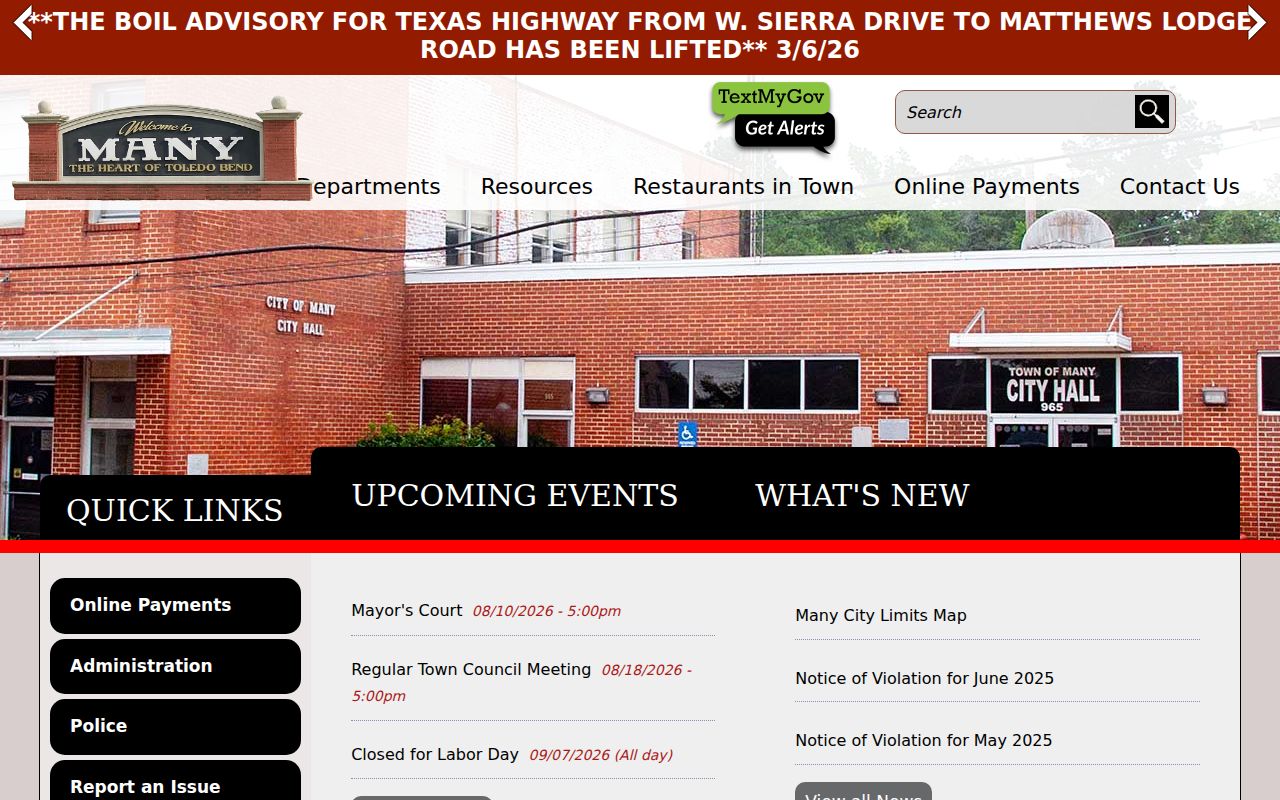
The town source is useful for current city contact paths, while the clerk and sheriff remain separate custodians for court and booking material.
Many Police Criminal Records
Many Police creates the initial report for events its officers investigate. Requesters should describe a specific record rather than ask for an undefined background check. Useful details include the event date, location, report number, involved incident, preferred delivery, and whether a certified copy is needed. No distinct official report-request form was located in the research, so confirm the current submission route, hours, fee, and identity requirements through the department before visiting.
The official Many Police page is the verified city channel and links the town's online fine option.
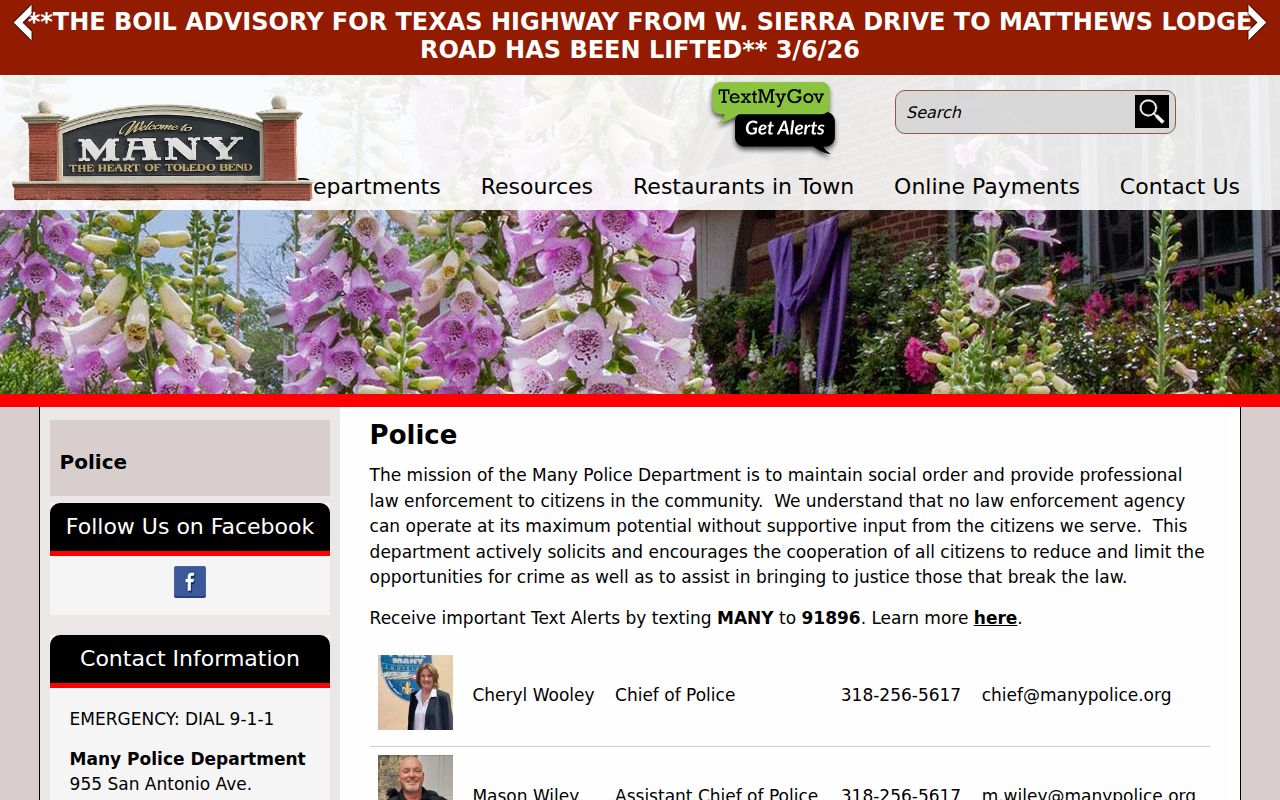
The page identifies the police source, but it is not a searchable archive of reports. Louisiana Public Records Law generally reaches records held by municipal bodies, while an exception may protect follow-up investigative material during pending litigation. The initial report remains a specifically important public category.
Many QuickCourt Payment Limits
The town police page links QuickCourt for online fine payment. That narrow purpose should control how the screen is used. A payment workflow does not establish that the service contains every Many citation, criminal charge, warrant, case image, or final disposition. It should never be described as a full criminal-history lookup.
The official linked payment screen shows the practical route available to a person who already has a Many matter to pay.
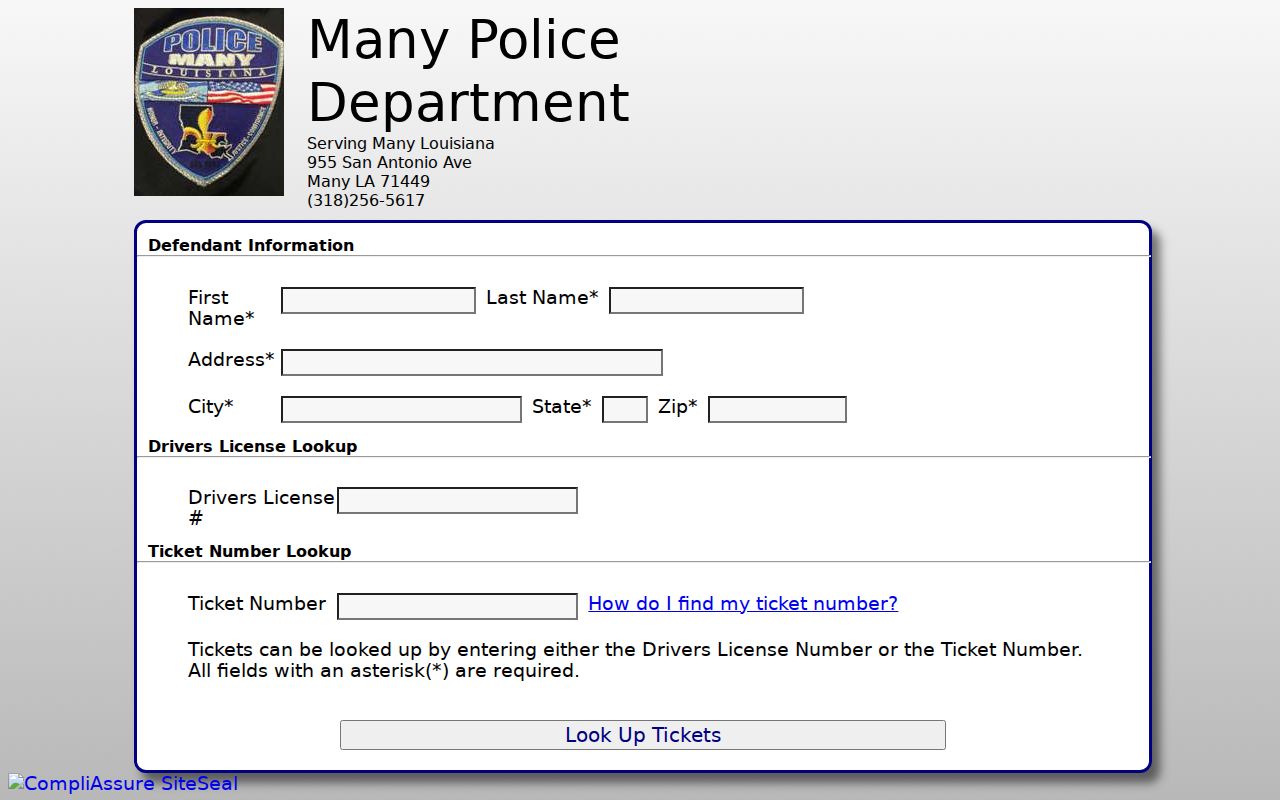
If the needed fact is a plea, judgment, hearing history, balance, warrant or capias status, or certified copy, ask the municipal court custodian directly. Never infer a warrant from an unpaid balance. A court clerk can state what the official docket shows and explain whether the record is municipal or belongs in district court.
Many Arrest and Booking Records
A Many Police arrest and a Sabine Parish booking are related but separate records. Police document the arrest and initial allegation. When the person is accepted at parish detention, jail staff create a booking identifier, record intake, charges or holds, bond and custody status, and eventual release information. That booking shows custody at a point in time. It does not prove guilt, and its charge label may differ from the charge later filed by the district attorney.
For a recent Many arrest, request the initial report from the arresting agency and the Article 228 booking entry from the sheriff. Then check the court. The dedicated Sabine Parish arrest history coverage explains the parish channel in more depth. Delays between arrest, booking, filing, and a first court minute are normal, so use dates and agency names when reconciling results.
Note: A Many booking is evidence of intake, while the court disposition is the best source for the legal outcome.
Many Court Record Boundaries
Many's municipal or Mayor's Court may handle town ordinance violations. Louisiana R.S. 33:441 supplies mayor's-court jurisdiction over municipal ordinance matters. State misdemeanors and felonies may instead move through the district attorney into the 11th Judicial District Court. Ask which law appears on the citation and which court received it. The answer determines where the docket and judgment live.
| Many matter | Best record source | What to request |
|---|---|---|
| Police incident | Many Police | Initial report and releasable attachments |
| Town ordinance or citation | Many court custodian | Docket, plea, judgment, balance, copy |
| Parish booking | Sabine Parish Sheriff | Article 228 booking entry and custody status |
| State prosecution | Sabine Parish Clerk | Minutes, filings, disposition, certified judgment |
A calendar entry only shows that a matter was set. It is not a conviction or dismissal. For a final state-case result, request the clerk's judgment or certified minute entry.
Many Municipal Criminal Court Records
City-level files can contain a citation number, ordinance or statute, hearing dates, plea, judgment, financial balance, and a warrant or capias entry when one exists. Availability and copy fees must be confirmed with Many because no verified public Mayor's Court case-search portal or published city copy schedule was found. Ask for the public docket and certified copy separately if formal proof is required.
| Court Name | Many municipal or Mayor's Court custodian; confirm the current official title |
|---|---|
| Case Types Heard | Municipal ordinance and qualifying city citation matters under Louisiana law |
| Case Lookup Channel | Phone or counter request; QuickCourt is verified only as a payment route |
| What the Docket Shows | Citation or docket number, charge, settings, plea, judgment, balance, and status where recorded |
| Copies & Fees | Ask the city custodian for plain and certified copy options and current cost |
Use the exact spelling and citation number when possible. If staff says the matter was referred for parish prosecution, shift the request to the Sabine Parish Clerk rather than assuming the city docket contains the later result.
Missing Many Criminal Case Results
LCRAA provides statewide clerk remote access and receives public criminal minute entries or summaries for district cases filed on or after January 1, 2020 under R.S. 13:5992. It does not promise every pleading image, pre-2020 file, sealed record, expunged matter, or Many ordinance case. A blank result can mean the search fields are wrong, the case is older, the matter remained municipal, or the record is restricted.
Search by case number when known, then try the full legal name and an approximate date range. Select Sabine or the 11th Judicial District Court where the portal offers that control. If the search remains blank, call the clerk. Ask about the criminal index, archival paper or microfilm records, certified dispositions, and whether the requested year is available remotely. Do not treat a no-result screen as proof that no Many record exists.
Where Many Criminal Records End Up
A Many police file does not automatically become the public court file. Police create the initial report and arrest paperwork. The sheriff adds booking data when parish detention accepts the person. The district attorney decides whether and how to prosecute a state offense, and the clerk records filed charges, minutes, pleas, judgment, and sentence. Reported fingerprints and dispositions then feed the central Louisiana repository.
Record flow: Many Police › Sabine Parish Courts › Louisiana Department of Public Safety and Corrections, Office of State Police, Bureau of Criminal Identification and Information
This flow helps choose the right age and kind of record. Police is the first stop for a fresh city incident. The sheriff is the source for intake. The clerk is the best source for a completed Sabine case, while BCII aggregates reported Louisiana cycles for an authorized self-review. One source should not be used as a substitute for all the others.
Reading Many Criminal History Fields
Record labels describe different stages. An arrest is a custodial action, not guilt. A minute entry is the clerk's short account of what happened in court. A disposition states the outcome or present status of a charge. A nolle prosequi means the prosecutor ended a charge, while dismissal and acquittal have different legal paths. Match each term to the source document before drawing a conclusion.
- Docket number
- The court's identifier for a case.
- Disposition
- The result or current status of a charge or case.
- Capias
- A court command to take a person into custody, often after nonappearance.
- Expungement
- Louisiana's process that makes a qualifying record confidential rather than erasing every authorized copy.
A Many city file may show a citation and balance, while a parish case file adds filed charges, counsel, bond, hearings, plea, judgment, sentence, and assessed costs. Compare like records and verify the final outcome with the court that owns the case.
Requesting Many Public Criminal Records
A focused request should name the document, date range, event, and custodian. For Many Police, ask for the initial report and any segregable public portion. For the city court, ask for the docket and disposition. For parish detention, ask for the booking record described by Code of Criminal Procedure Article 228. For district court, ask for minutes or a certified disposition. This phrasing lets an office find the record without forcing it to guess what “criminal history” means.
If an office cites the pending-investigation exception, ask whether the initial report, booking information, citation, or filed bill of information can still be released. Also ask for nonexempt portions after protected facts are removed. Do not demand juvenile, expunged, victim, confidential-source, or protected investigative information. Those limits apply even when other parts of the same Many record are public.
Public Access Rules for Many Records
Louisiana law begins with a broad definition of public records held by municipal and parish bodies, then applies specific limits. Many Police and the town court are custodians of their own records. R.S. 44:3 protects much pending investigative material but preserves access to key initial, booking, citation, and filed charging records. District minute access and expungement confidentiality operate under separate rules.
Key Statutes:
Louisiana Public Records Law, R.S. 44:1 broadly defines public records held by government bodies.
Louisiana R.S. 44:3 protects specified investigative material while keeping initial reports and listed booking records public.
Louisiana R.S. 33:441 authorizes mayor's courts to hear municipal ordinance violations.
Expunged material is confidential under Article 973, and juvenile dissemination is restricted. Published criminal history should be complete and accurate. Verify a Many result with the office that created it and use it only for lawful personal, court, or public-safety purposes.